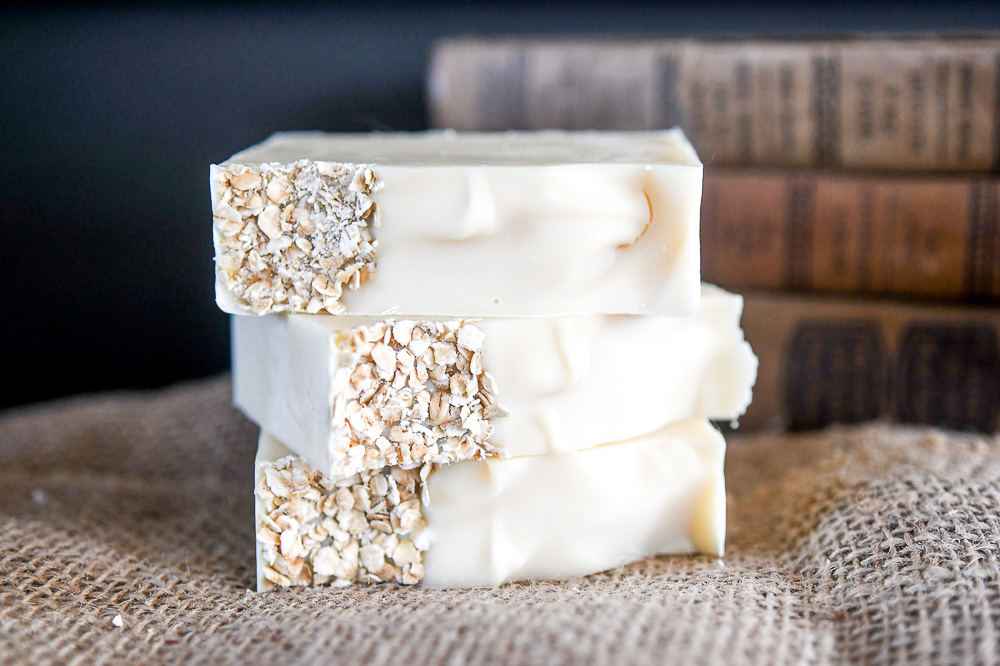
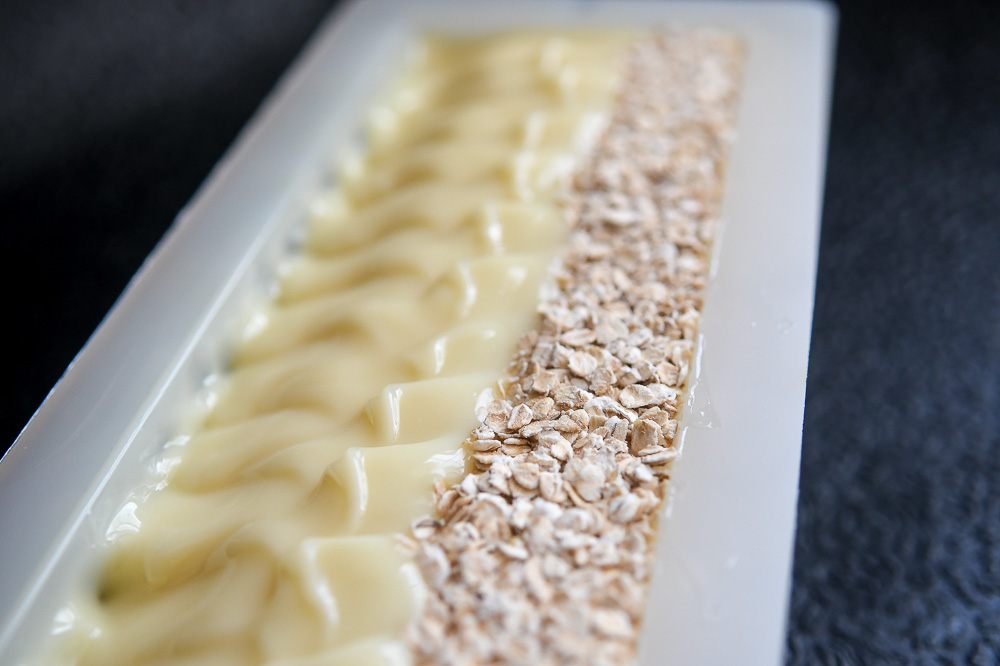
Making your own goats milk soap is a rewarding experience. Not only do you get to create a natural and nourishing product for your skin, but you also gain control over the ingredients. However, before you dive into this fun project, it’s crucial to gather all the necessary supplies. This complete guide will walk you through everything you need to make goats milk soap.
Essential Ingredients to Make Goats Milk Soap
Here’s a list of basic key ingredients that you’ll need for making your own goat milk soap.
Goat Milk
The star of the show! Goats milk isi rich in caprylic acid, a medium-chain fatty acid that contributes to a creamy lather and a low pH, making the soap gentle on the skin. It also contains vitamins A, B6, B12, C, and E, which are beneficial for skin health.
Fresh, frozen, or powdered goat milk can be used to make soap, however my goat milk soap recipe recommends using frozen milk.
Fresh and powdered milk can be used in heated methods of soap making. Powdered milk needs to be reconstituted with distilled water.
Base Oils
Oils and butters provide the fatty acids that, when combined with lye, create a solid soap. Each oil brings different properties to the final bar, influencing its hardness, lather, and moisturizing qualities.
Hard Oils
These are solid at room temperature and create a hard, long-lasting bar with a stable lather.
Coconut Oil: The king of lather! It produces large, fluffy bubbles but can be drying in high concentrations. A usage rate of 20-30% is common.
Palm Oil (Sustainably Sourced): A workhorse oil that provides hardness and a creamy, stable lather. Look for certified sustainable palm oil (RSPO) to support ethical production.
Shea Butter or Cocoa Butter: Adds incredible conditioning and a luxurious, moisturizing feel.
Soft Oils
These are liquid at room temperature and contribute moisturizing properties and a gentle feel.
Olive Oil: A classic soaping oil that creates a mild, conditioning bar. Soaps with high olive oil content, like Castile soap, take longer to cure.
Sweet Almond Oil or Avocado Oil: Adds a silky, rich feel and extra moisturizing properties.
Lye (Sodium Hydroxide - NaOH)
This is the catalyst for a chemical reaction called saponification, which transforms oils into soap. Without lye, you simply have a mixture of milk and oils, not soap. This reaction is needed to make goat milk soap.
Handle with extreme caution!
Lye is a highly corrosive, caustic chemical. You must use 100% pure sodium hydroxide, also known as caustic soda. It’s a fundamental truth of soap making that all lye is consumed in the saponification process. If your recipe is calculated correctly, your final soap bar will contain no active lye.
The Right Tools (For Precision and Efficiency)
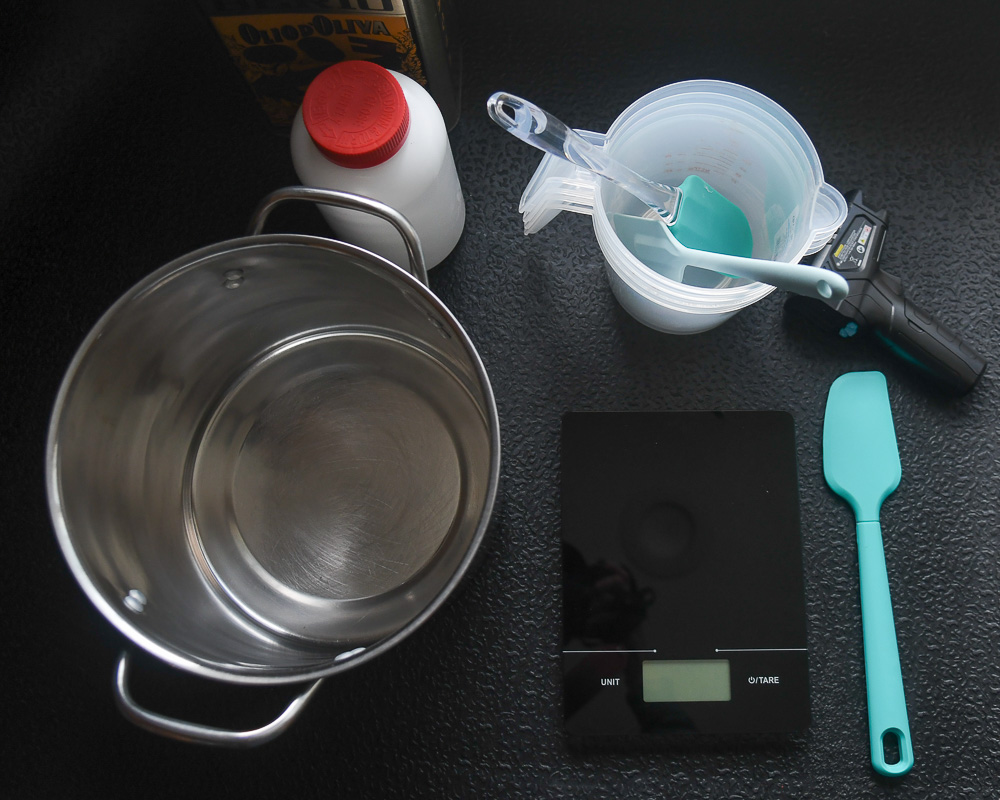
Digital Scale: Soap recipes are measured by weight, not volume. A kitchen scale is the most important tool you’ll own. You’ll want to measure in oz.
Immersion Blender (Stick Blender): An immersion blender cuts down stirring time from hours to just a few minutes. It is a game-changer for achieving “trace”—the point where the soap batter thickens.
Heat-Resistant Containers: You’ll need separate, dedicated containers for your lye solution and for mixing the main soap batch. EVER use aluminum, as it reacts violently with lye. Long spouts help with mixing colors and creating fun patterns.
Thermometer: You must monitor the temperature of both your oils and your lye solution. They need to be within a specific temperature range, typically 90-130°F (32-54°C), depending on your recipe. A heat gun is highly recommended to avoid contaminating your product.
Soap Molds:Silicone soap molds are incredibly user-friendly because they make it easy to unmold your soap. You can also use a wooden loaf mold lined with freezer paper for a classic bar shape.
Spatulas: Silicone or stainless steel spatulas are best for stirring and scraping. Dedicate a set for soap making only, and don’t cross-contaminate them with food.
By understanding the function of each of these supplies, you are not just gathering items; you are preparing for a safe, successful, and deeply satisfying creative experience.
Critical Safety Equipment
When working with lye, safety is the top priority. This equipment is not optional.
Safety Goggles or Glasses: Protect your eyes from accidental splashes. Lye can cause permanent damage to your vision in an instant.
Chemical-Resistant Gloves: Heavy-duty rubber or nitrile gloves are a must to protect your skin from burns.
Long-Sleeved Shirt and/or Long Pants: Provide an extra layer of protection for your skin from lye.
Making goats milk soap is a rewarding and creative process that yields a luxurious product you’ll be proud to use. By understanding the function of each item on your list, you’re not just gathering supplies; you’re setting yourself up for success.
The journey from raw materials to a perfectly cured, nourishing bar of soap is a deeply satisfying one, and it all starts with gathering the right supplies. Follow along and learn how to make goat milk soap.
Thanks for visiting my little piece of the internet!
I’m Maria, a lover of furry things, coffee and anything creative. This blog is where I love to share affordable home decor ideas, great DIYs, yummy recipes, unique crafts and so much more.